Throughout the month of February 2026, in recognition of Black History Month, RSCCM is African-Americans and mediation. RSCCM is also celebrating staff, volunteers, board, and community members who are a part of the African-American community. As a mediation center, we often think about the effects of our political environment on the mediations we facilitate and the conversations we engage in.
I sat down with Bob Proctor, a former RSCCM board member, former lawyer, and current volunteer mediator to discuss his history with the court system. He weighed in on the effectiveness of mediation. This interview is an effort to explore the merits of mediation for the benefit of marginalized communities, especially the African-American community. All those needing systems of support during changing political times turn to organizations like RSCCM as a critical resource.
Can you tell me a bit about your career and how you became a mediator?
I’m a lawyer by profession. Committed to the state bar in 1973. I graduated [from] Detroit College of Law, my undergraduate degree is from the University of California, Berkeley as a political science major. Started out as an econ major and should have finished that, because I only had one class to take before I switched majors. Detroit College of Law is now the Michigan State University school of law so I have a degree reflecting that transition as well. And my resume says I’ve completed 24 of the 26 credits necessary to earn a master’s of law degree and labor law. I probably never get those other two credits done. That’s been years ago.
I became a mediator in August of 2002, after going through the mediation training, under 2.41, I believe, of the Michigan court rules. That was, I believe, the Resolution Services Center was involved in facilitating that training. Thereafter, at some point, I became a member of the board of directors of the Resolution Services Center. [I] completed my service training with the Resolution Services Center of [Central] [sic] Michigan to be fully certified as a mediator. I’ve been able to maintain that status since then. I have to update my latest training that was in August updated with Ingham County Circuit Court.
I’m from Detroit. I came to Lansing in 1974, to be considered for a position with the Michigan legislature. Was eventually hired as counsel to the House of Labor Committee. And incidentally served as counsel to the Committee on Constitutional Revision and Women’s Rights. Why? Both committees were chaired by representative Daisy Elliott. So, much of my time was spent with the Labor Committee until 1975, when I took a position with the Michigan Civil Service Commission as a hearing officer administrative law judge. Retired from that position in 2002.
In your experience, how does mediation impact the African-American community?
I think no differently than it impacts any other community. It’s an alternative dispute resolution tool that is less expensive and far more timely process for resolving disputes. It provides the participants with more control over the outcome of dispute resolution then they would otherwise have going through the judicial processes for resolving their disputes.
I believe in mediation. I’ve been at this since late 2002. I’ve had a couple matters that I sought mediation for myself.
In our increasingly conflicted and polarized world, how does conflict resolution help African Americans succeed?
My experience as an administrative law judge, hearing officer, factfinder, arbitrator, and mediator has taught me that disputes often arise over perceptions people develop about the motivations of others… Many times, those motivations are based on misperceptions. I’m gonna try to explain that in more detail in a moment.
Mediation provides opportunities for participants involved in these disputes to talk about and clear up those misperceptions. So, it’s often said that perception is reality. And I maintain that is not so.
What is real about perceptions is that people make decisions on the basis of perceptions that often are erroneous. And those decisions are real in their consequences.
So if you believe that something occurred that did not actually occur. And you act on the basis of believing that it did occur. Those decisions have adverse consequences for the parties involved. And I found, in the course of what I do, that I’m most pleased when people say words to the effect: “I didn’t know that that was how you viewed this,” or “I didn’t know that that’s what you thought of me,” or “I didn’t know that you thought I was thinking about this, that, or the other.” “Now that I understand it, I have a better appreciation for how our differences arose.” And it sets the stage for being able to talk more directly with the other person about how we can [sic] put this to rest.
Let me share an example with you I often use…
I had a 54A mediation and small claims many years ago. And that’s when we were at the court. So I’m using the magistrate’s courtroom. She’s in her chambers on the other side of the door.
Two ladies, and in this instance, it was two people of color. Got a little animated during the course of the mediation. And things started to go a little south. I’m sure that’s what the magistrate thought was occurring, because she stepped into the courtroom a couple of times because the voices had…become elevated. I put my hand up to indicate that I have control of this, and things will calm down, and we’ll proceed, but as I said, there were a couple times when the ladies’ voices became elevated. Now, they talk loud in the first place, so that wasn’t much to me.
Over in the course of saying, “Let’s get back to the real issues involved here.” And without going into detail, what pleased me most was at the end of the mediation, they had resolved their dispute. But the takeaway for me, these two ladies walked out of the courtroom, out of the building, arm and arm, and talking about their similar acquaintances. Have you seen so and so? How is she doing? Da da da, laughing. And I said, It couldn’t have been a better outcome than that.
Throughout your experience in the legal community, how have you seen African-American voices being amplified? Are there any big wins you’ve seen regarding this?
Oh, sure. For me, improvements in education, employment, and opportunities for economic and social movement have been the result of the use of the legal system to strike down those barriers, to opportunities confronted by African Americans, as well as other marginalized or racially disadvantaged groups.
So we could point to all kinds of legislation, but most people will remember Brown versus Board of Education, Civil Rights Act of 1964, the Voting Rights Act, fair housing legislation, and in Michigan, the Elliott-Larsen Civil Rights Act, which was a piece of legislation I worked on for two years before it passed. As I served as chair of the labor of the council to the Labor Committee under Daisy Elliott, one of the named persons in that piece of legislation.
Much of this started out with people going to court, saying this is wrong, unfair, unconstitutional, and in violation of the law were our societal norms. And in the current environment, I fear that there’s an attempt to roll back some of those things that we’re still celebrating. Whether February continues to be a month recognizing the history of African-Americans, I don’t know. As I understand, there’s some movement to do away with some of the holidays.
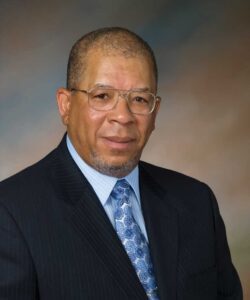
Bob Proctor graduated from Detroit College of Law and University of California Berkeley. He joined the state bar in 1973 and has been mediating since 2002. Proctor served on the RSCCM board of directors between 2011-2014 and currently volunteers as a mediator for the center.